Every Animal Colour in Planet Zoo’s Zookeepers Pack
The Planet Zoo Zookeepers Animal Pack adds seven new animals to your zoo, all chosen based on requests from the Planet Zoo community.
The pack features seven new habitat animals: African spurred tortoises, Coquerel’s Sifakas, Hamadryas baboons, Kirk’s dik-diks, markhors, Pallas’s cats, and spectacled bears.
There are some interesting animals in this pack, including a critically endangered lemur, one of the tiniest antelope species, and a very fluffy cat.
You’ll also find 22 different colourmorphs in this DLC, with two rare coats to look out for.
Here’s a full list of the animals and their colourmorphs included in the Zookeepers pack.
OVERVIEW
Total number of animals: 7
Habitat animals: African spurred tortoise, Coquerel’s Sifaka, Hamadryas baboon, Kirk’s dik-dik, markhor, Pallas’s cat and spectacled bear
Total number of colour morphs: 22
Animals with special coats: Markhor and Pallas’s cat
African Spurred Tortoise
The African spurred tortoise is the largest mainland tortoise and can weigh up to 90 kilograms.
These tortoises can live between 80 and 100 years, making them some of the longest living animals on Earth.
The species name sulcata comes from the Latin word for ‘furrow,’ which refers to the grooves you can see on their shell.
In Planet Zoo, the African Spurred Tortoise can have three shades of brown shells.
Total colourmorphs: 3
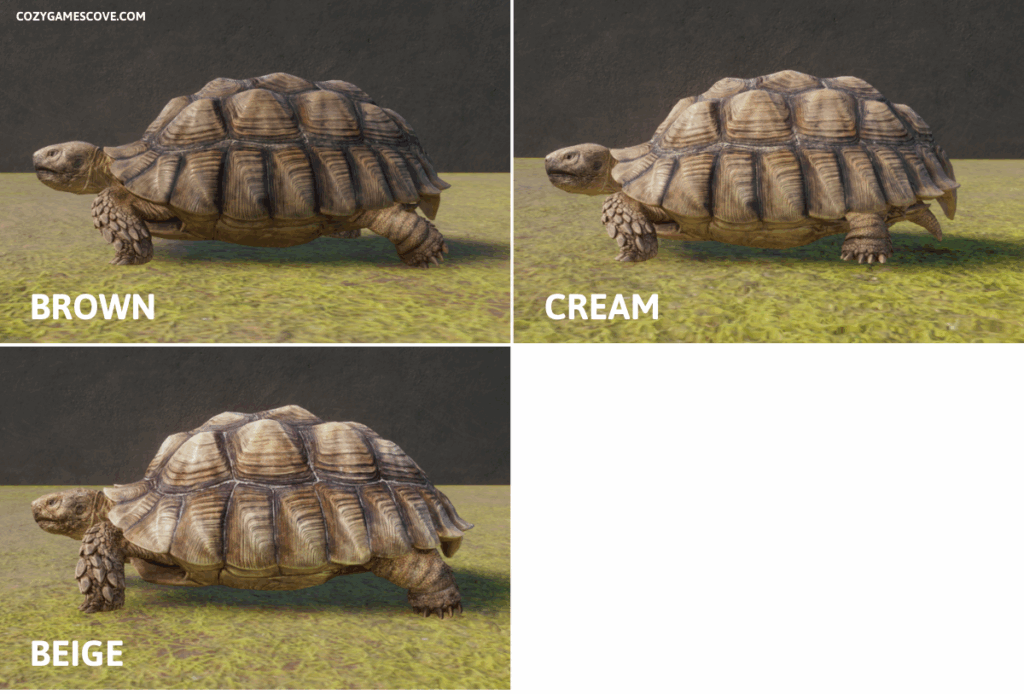
Colours are listed as:
- Brown shell and skin
- Cream shell and skin
- Beige shell and skin
Coquerel’s Sifaka
Coquerel’s Sifaka is a critically endangered lemur species from Madagascar.
They are often called dancing lemurs because of the way they move upright on their back legs, hopping from side to side.
Their name comes from the unique call they make, which echoes through Madagascar’s forests and sounds a bit like shif-auk.
They only have a single colour in Planet Zoo.
Total colourmorphs: 1
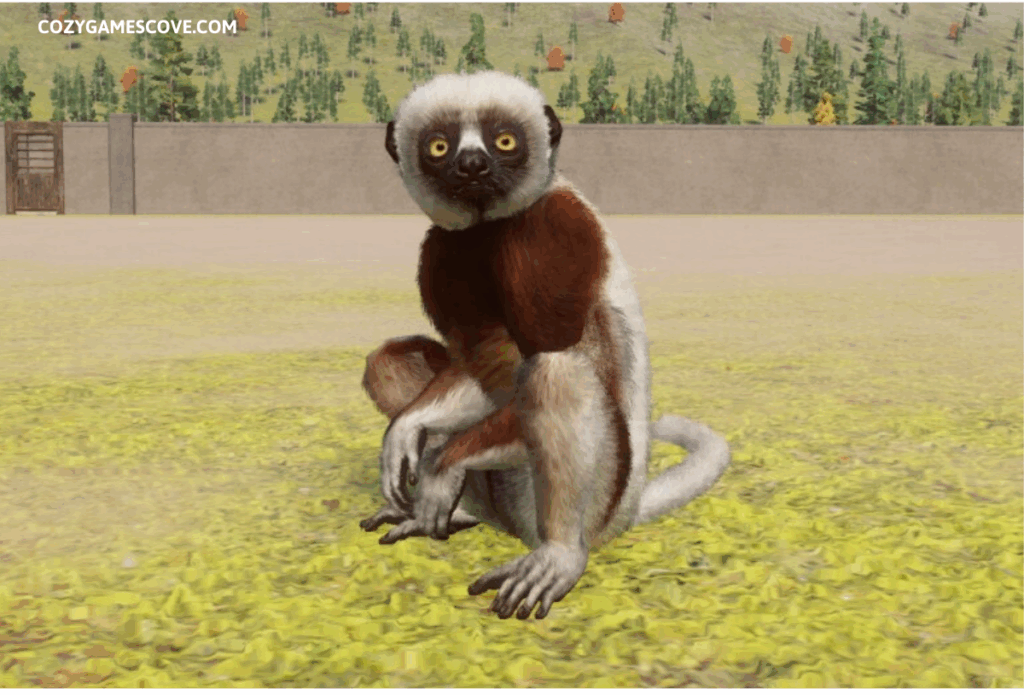
Colours are listed as:
- White back, maroon chest and grey tail
Hamadryas Baboon
The hamadryas baboon can be found in the hills along the Red Sea coasts of both Africa and Arabia.
It’s the only wild primate living in Arabia, and the only baboon species found outside Africa.
In Ancient Egypt, hamadryas baboons were seen as symbols of Thoth, the god of wisdom. They were held in such high regard that some were even mummified after they died.
Hamadryas baboons show sexual dimorphism, meaning males and females look different. In Planet Zoo, there are three colour variations for males and three for females.
Total colourmorphs: 6
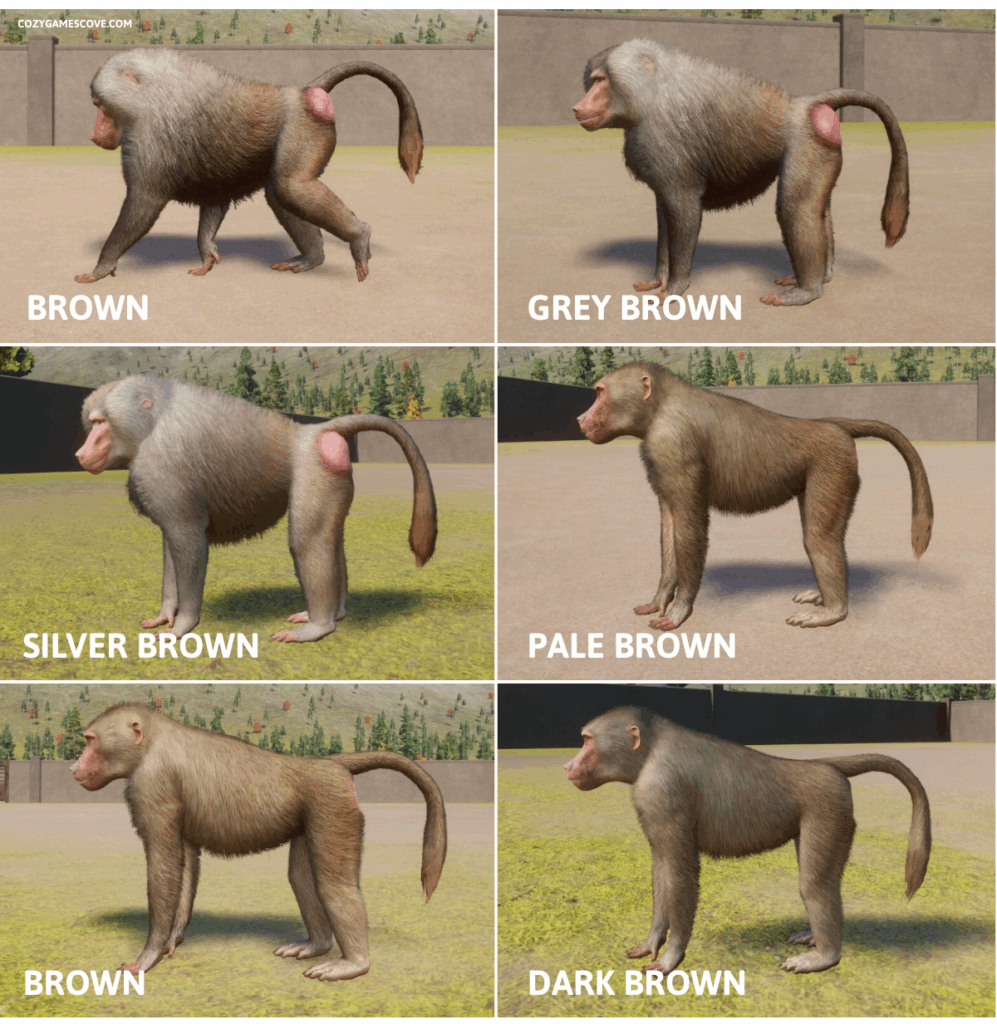
Colours are listed as:
- Brown fur and mane
- Grey-brown fur and mane
- Silver-brown fur and mane
- Pale brown fur
- Brown fur
- Dark brown fur
Kirk’s Dik-Dik
Dik-diks are one of the smallest antelope species in the world. They live in the grasslands of eastern and southern Africa, and only weigh up to 7kg. Even fully grown, they reach just 40cm tall.
Dik-diks get their name from the sound they make when startled. If they sense danger, they run in a zigzag pattern and whistle through their noses, making a “dik dik” call.
These tiny antelopes are well adapted to dry environments. They don’t need to drink water, since they get all the moisture they need from their food.
In Planet Zoo, there is only a single Kirk’s dik-dik colour.
Total colourmorphs: 1
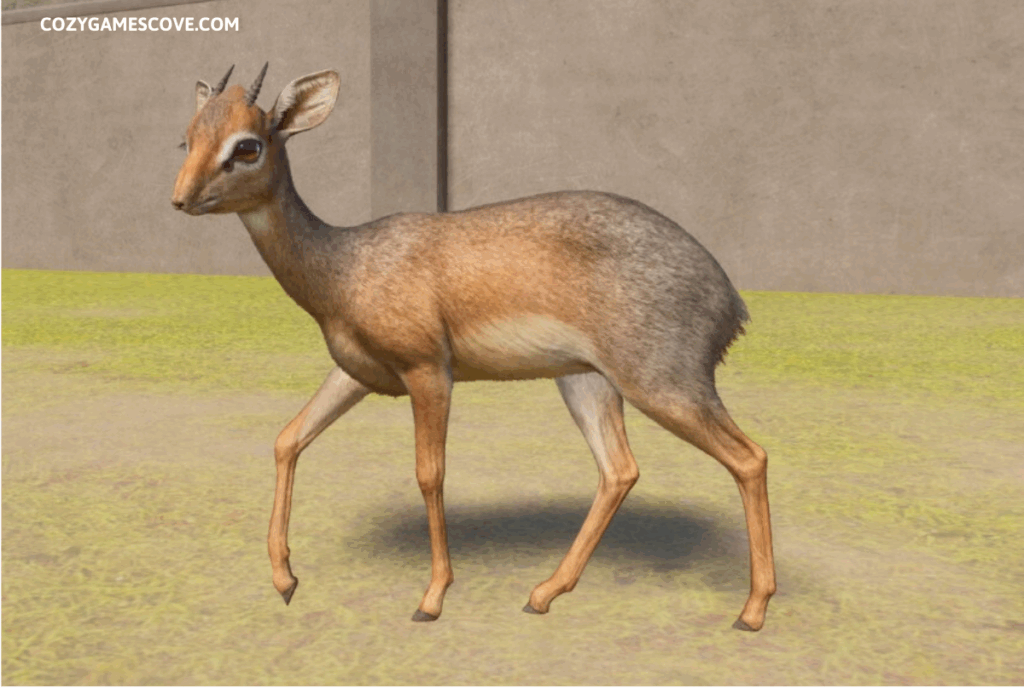
Colours are listed as:
- Brown body with grey blanket and pale underside
Markhor
The markhor is the largest wild goat in the world, known for its impressive corkscrew-shaped horns that can grow up to 160 cm long in males.
Markhor are Pakistan’s national animal. Despite their large size, they are surprisingly agile and can easily scale steep bare rock faces.
With their broad hooves and strong legs, markhor are well adapted to life high in the mountains, and can live at altitudes between 4,000 and 12,000 feet.
In Planet Zoo, the markhor has eight colours. Males and females each have three brown variations, and there is also a leucistic coat.
Total colourmorphs: 8
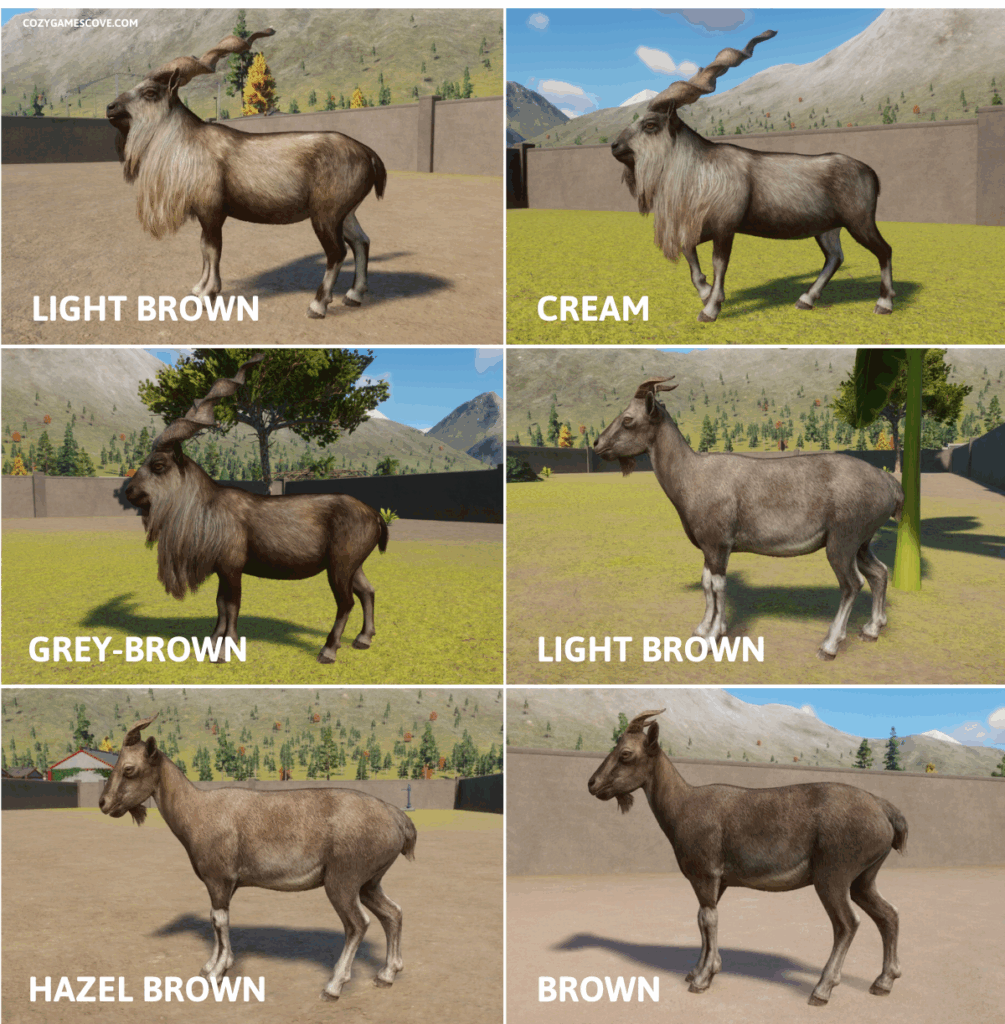
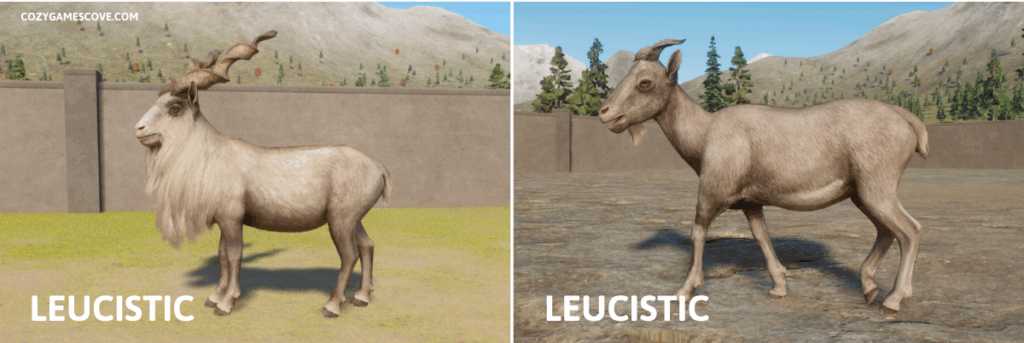
Colours are listed as:
- Light brown fur and shaggy mane with dark legs and back
- Cream fur and shaggy mane with dark legs and back
- Grey-brown fur and shaggy mane with dark legs and back
- Leucistic: White fur
- Light brown fur with white legs
- Hazel brown fur with white legs
- Brown fur with white legs
- Leucistic: White fur
Pallas’s Cat
Pallas’s cats are known for their incredibly fluffy coats. Their thick winter fur keeps them warm even when temperatures fall below -58°F (-50°C). When summer comes, they lose much of this fluff to stay cool.
Their thick, bushy tails also come in handy for keeping their feet warm, as they sit on them to protect their paws from the cold.
The scientific name for the Pallas’s cat is Otocolobus manul. In Greek, this means “ugly-eared” or “stumpy-eared.”
In Planet Zoo, the Pallas’s cat appears in its usual grey colour and also in a special erythristic coat.
Total colourmorphs: 2
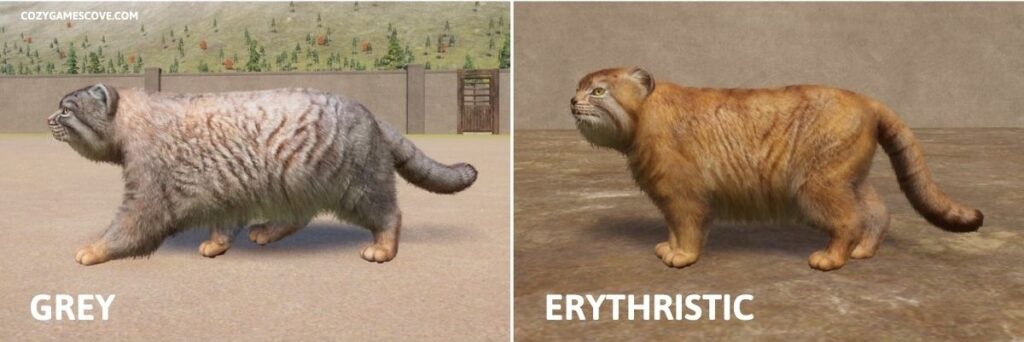
Colours are listed as:
- Grey fluffy fur with black markings
- Erythristic: Rusty red fluffy fur with dark markings
Spectacled Bear
The spectacled bear is the only bear species native to South America.
It gets its name from the cream-colored rings around its eyes that look a bit like glasses. Each spectacled bear has its own unique facial markings, and some do not have these ‘spectacles’ at all.
Spectacled bears are excellent climbers and spend much of their time in trees.
In Planet Zoo, spectacled bears have a single colour coat.
Total colourmorphs: 1
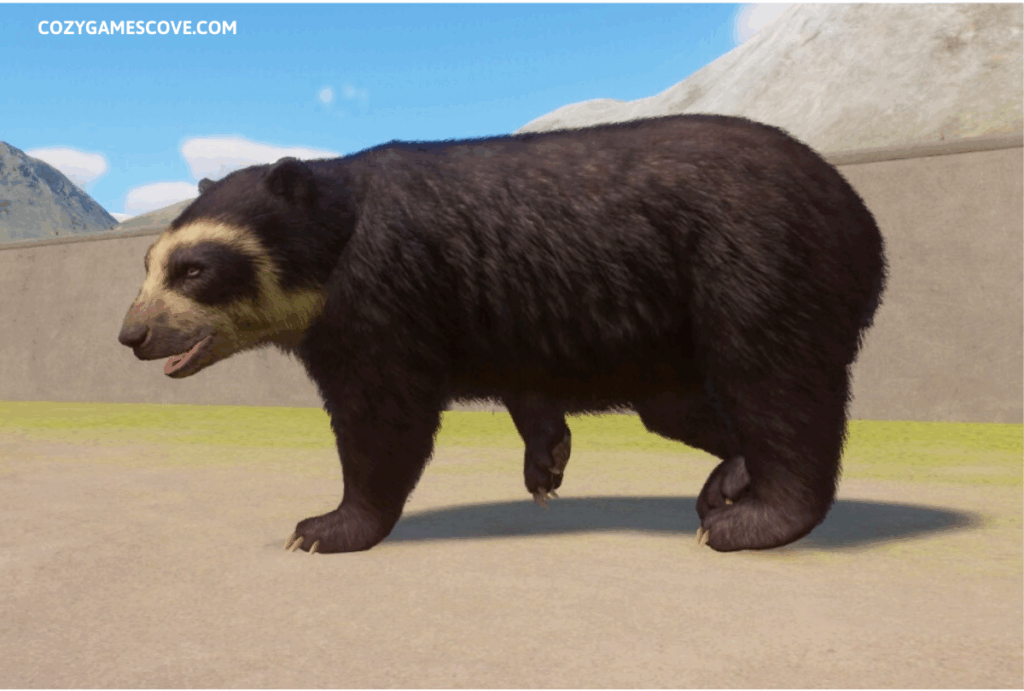
Colours are listed as:
- Black fur with pale face markings
A List of Animal Colours in Planet Zoo
I’ve managed to collect every animal colour in Planet Zoo! Take a look below to see all the colors for each pack.