All Planet Zoo Americas Animal Pack Colour Morphs: Common & Rare
The Planet Zoo Americas Animal Pack adds a variety of new animals to your zoo, each one native to North, South, or Central America.
While this pack doesn’t include a new exhibit animal, it does introduce seven new habitat animals to care for. You’ll be able to welcome coyotes, ocelots, bush dogs, greater rheas, white-faced sakis, American flamingoes, and bighorn sheep to your zoo.
This pack also features a decent selection of colourmorphs with 24 in total. Three of the animals also have special albino and leucistic variations.
Below, you’ll find a complete list of all the animals and their colourmorphs included in the Planet Zoo Americas Animal Pack.
OVERVIEW
Total number of animals: 7
Habitat animals: Coyote, ocelot, bush dog, greater rhea, white-faced saki, American flamingo and bighorn sheep
Total number of colour morphs: 24
Animals with special coats: Coyote, ocelot and greater rhea
Coyote
While there is only one species of coyote, there are at least 19 subspecies, each adapted to different climates and regions across North and Central America.
Coyotes usually mate for life and form strong family bonds. Both parents share the work of raising their pups.
Coyotes can make around 12 different vocalisations, which explains why their scientific name means “barking dog”!
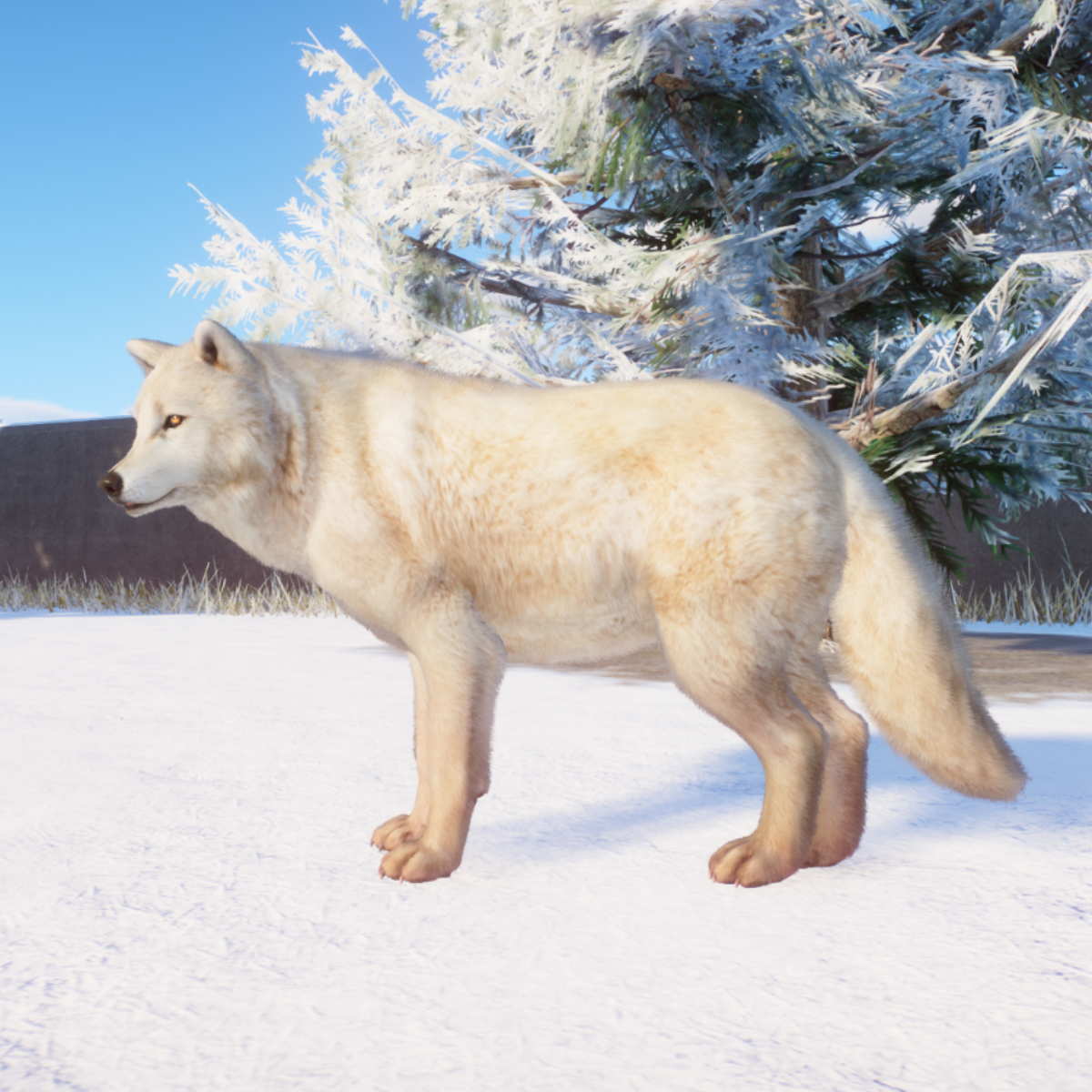
In Planet Zoo, coyotes come in three different shades of brown fur, and there is also a rare albino variant.
Total colour morphs: 4
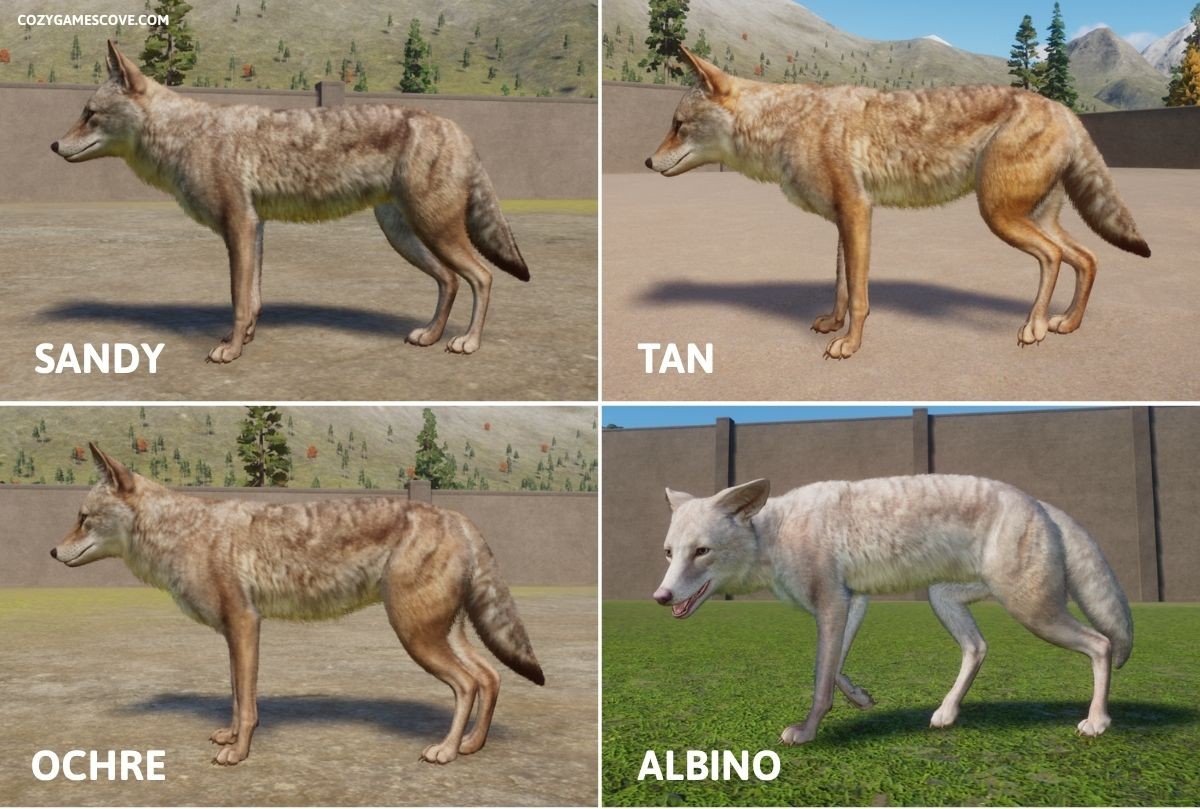
Colours are listed as:
- Sandy marbled fur with darker back
- Tan marbled fur with darker back
- Ochre marbled fur with darker back
- Albino – White marbled fur
Ocelot
Ocelots can be found from southern Texas all the way down to northern Argentina in South America.
Ocelots are the second-largest spotted cats in South America, after jaguars. Each ocelot has a unique coat pattern, and even the spots and colors on their right and left sides are different.
The scientific name for ocelots is leopardus pardalis, which means “like a leopard.” The word “ocelot” comes from the Aztec word “tlalocelot,” meaning “field tiger,” which was their name for a jaguar.
In Planet Zoo, ocelots come in both their classic yellow coat and a leucistic white variant.
Total colour morphs: 2
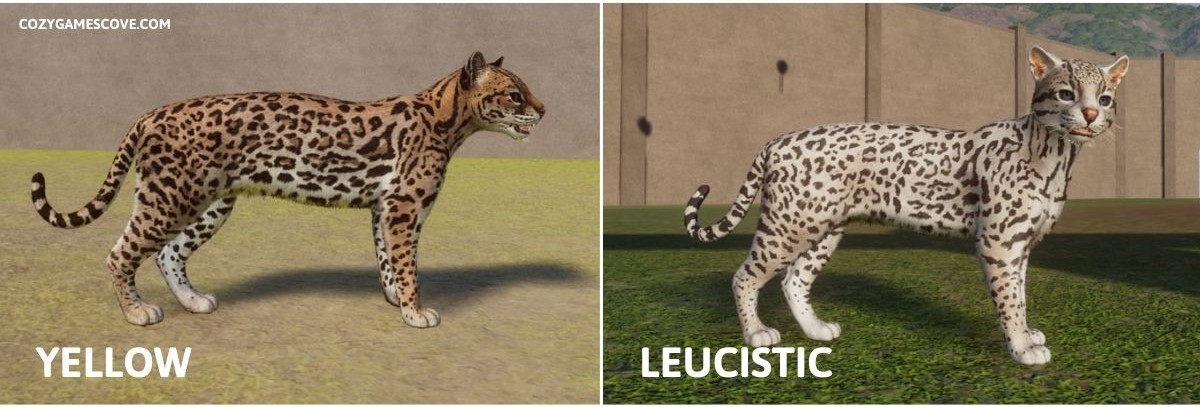
Colours are listed as:
- Yellow coat with elongated black-beige rosettes
- Leucistic: White coat with elongated black rosettes
Bush Dog
Bush dogs live in Central and South America, where they form close family groups led by a dominant pair.
Bush dogs are so rarely seen that scientists first discovered them from fossils, and for a long time, people thought they were extinct. Even today, no one knows exactly how many bush dogs live in the wild.
Bush dogs have partially webbed feet that help them swim and reddish-brown fur that lets them blend into the undergrowth.
Bush dogs in Planet Zoo have fur that comes in three different shades of brown.
Total colour morphs: 3
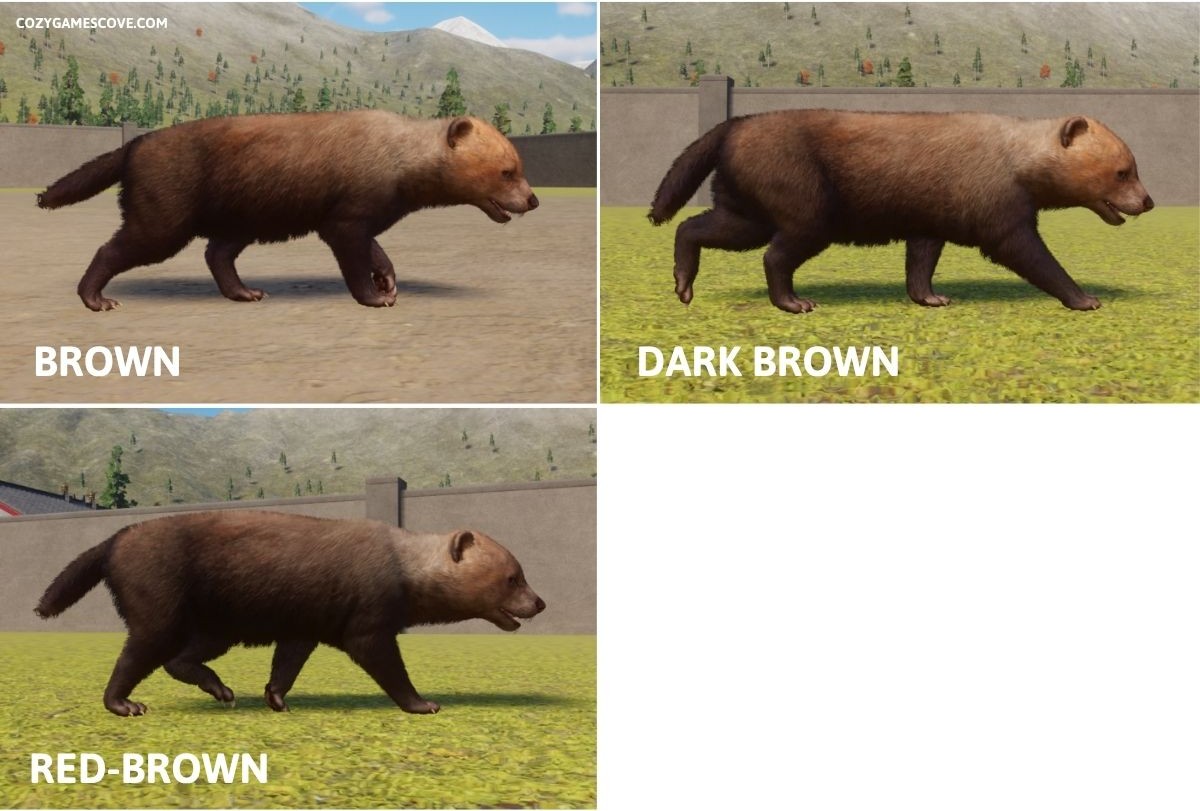
Colours are listed as:
- Brown fur with dark legs and lighter head
- Dark brown fur with dark legs and lighter head
- Red-brown fur with dark legs and lighter head
Greater Rhea
The greater rhea is a large, flightless bird from eastern South America, and it’s a close relative of ostriches and emus.
It’s the biggest bird in South America, standing around 4 feet tall and able to run up to 37 miles per hour.
The greater rhea is named after Rhea, a Greek goddess associated with the earth, a fitting name for a bird that spends its life on the ground.
In Planet Zoo, both male and female rheas are grey, but males have a darker base on their neck. There are also leucistic greater rheas, and in these, the males still have a dark neck base.
Total colour morphs: 4
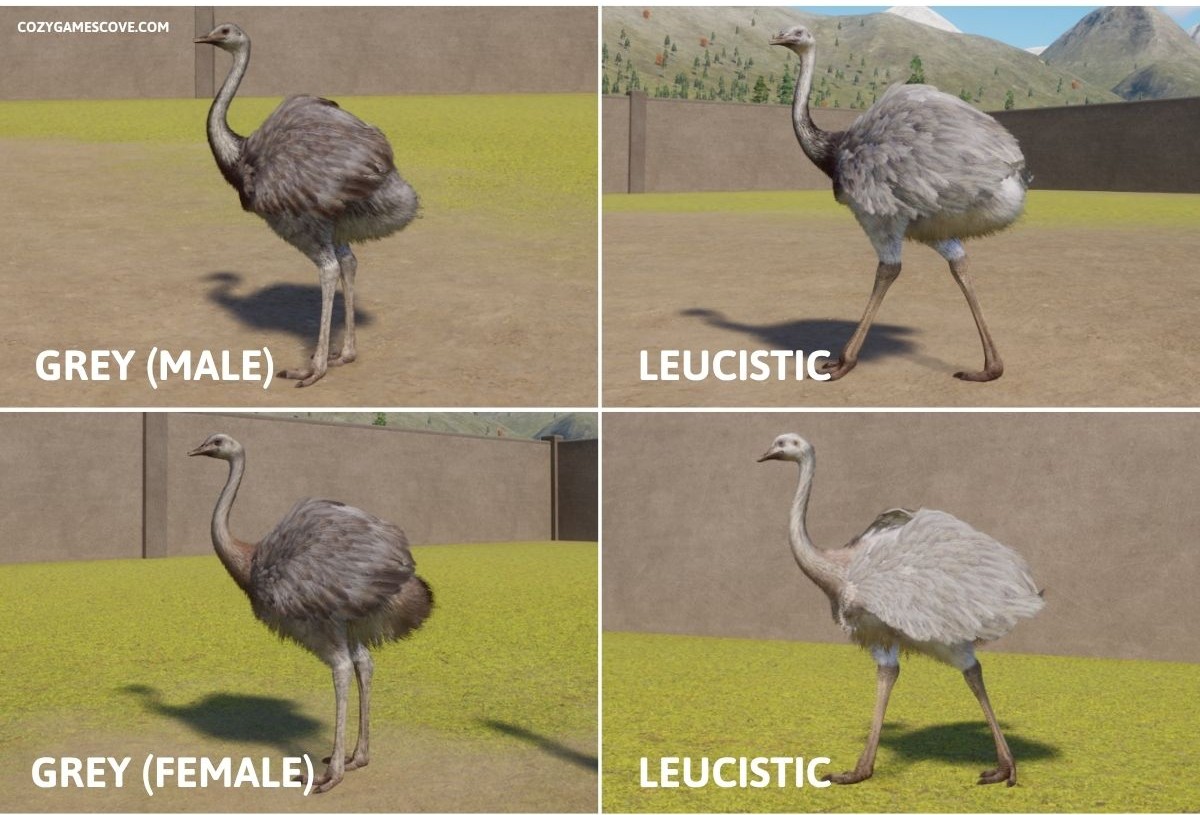
Colours are listed as:
- Grey feathers, dark base of neck (males)
- Leucistic: White feathers, dark base of neck (males)
- Grey feathers (females)
- Leucistic: White feathers (females)
White-Faced Saki
White-faced sakis are monkeys from South America that spend nearly all their lives in the trees.
They are sometimes called ‘flying monkeys’ because they can jump up to 10 meters from one branch to another.
Males and females look different, a trait called dimorphism. In Planet Zoo, this means there are two colour variations: one for males and one for females.
Male white-faced sakis have black coats and white faces. Females look quite different, with shaggy grey fur and a reddish chest.
Total colour morphs: 2
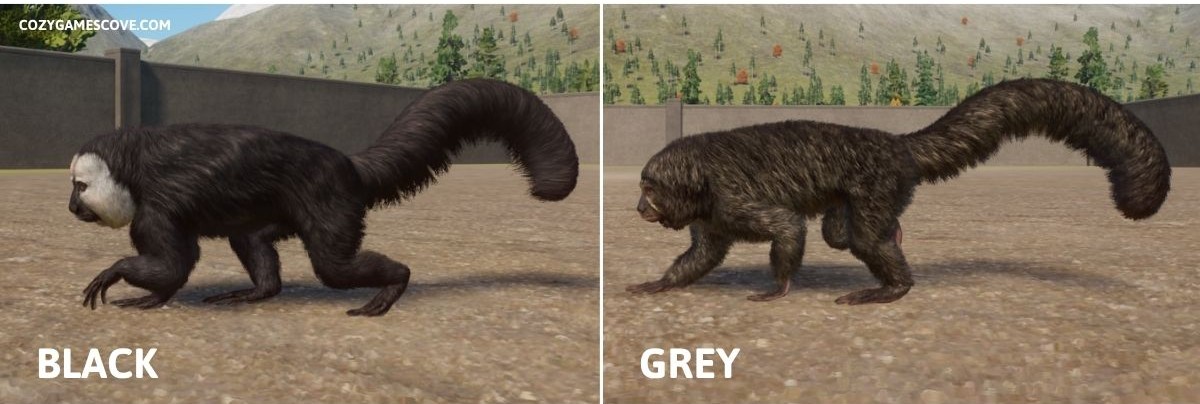
Colours are listed as:
- Black shaggy fur and white face ruff (males)
- Marbled grey shaggy fur with reddish front (females)
American Flamingo
American flamingos are the only flamingos found naturally in North America. They are also the brightest and among the largest of all flamingo species.
Both male and female flamingos make a bright pink crop milk in their throats to feed their chicks. Parents can turn almost white because they give so much of their pigment to their young.
The reason flamingos often stand on one leg is to help reduce heat loss through their legs and feet, especially when they are in cold water.
In Planet Zoo, American Flamingos come in three different shades of pink feathers.
Total colour morphs: 3
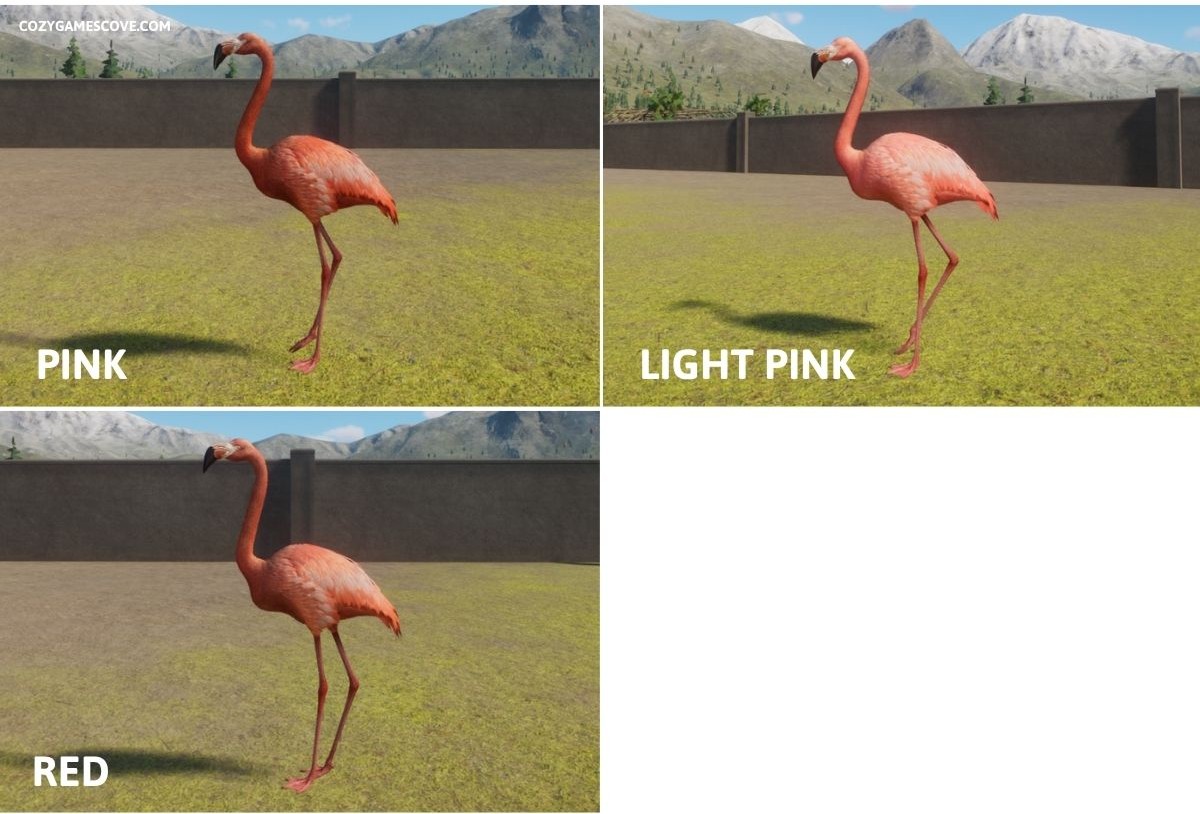
Colours are listed as:
- Pink plumage
- Light pink plumage
- Red plumage
Bighorn Sheep
Bighorn sheep can be found from Canada’s Rocky Mountains all the way to the deserts in the American Southwest. In the Rockies, they are a sign that the ecosystem is healthy.
Their horns keep growing throughout their lives, and you can actually count the ridges on a ram’s horns to figure out how old it is.
Their hooves are specially designed, with a tough outer edge and a soft centre, so they can balance on rocky ledges that are just two inches wide.
In Planet Zoo, bighorn sheep have six different fur colors: three shades of brown and three lighter isabelline shades.
Total colour morphs: 6
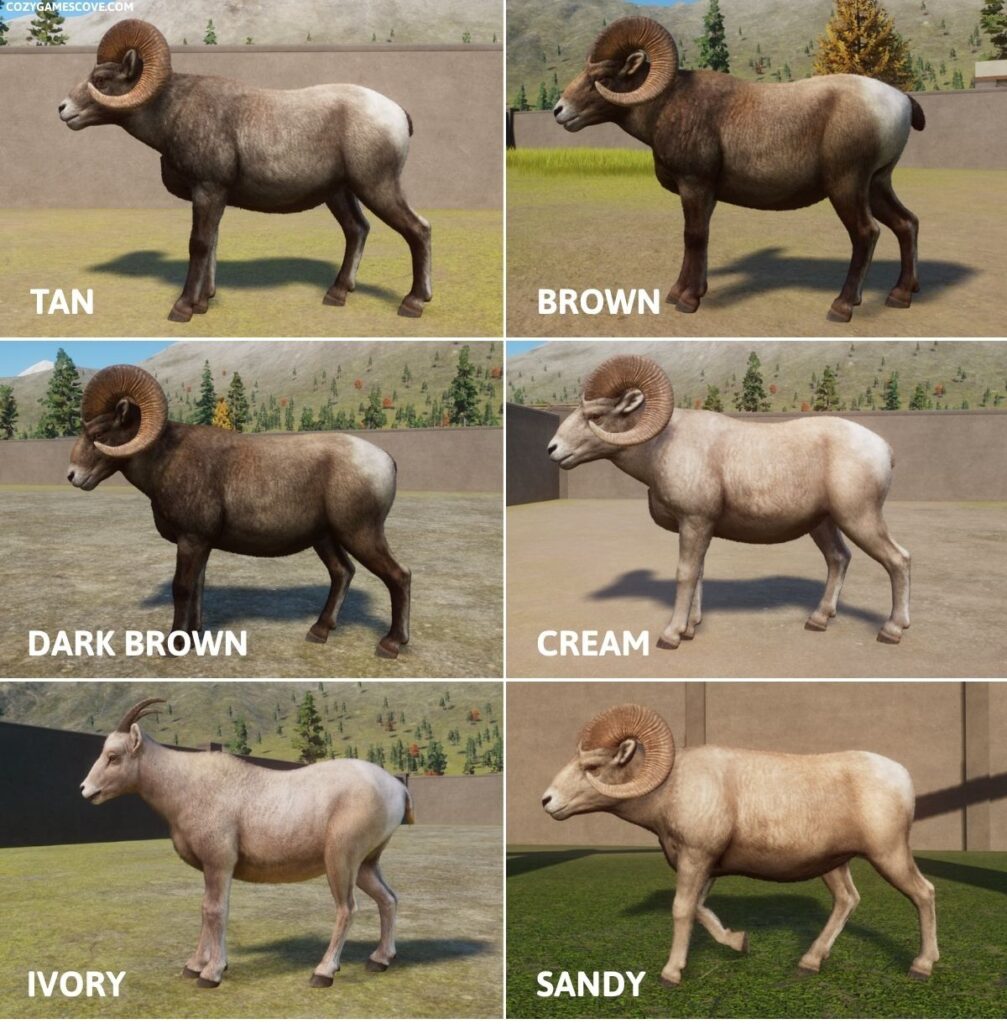
Colours are listed as:
- Tan fur with white rump patch
- Brown fur with white rump patch
- Dark brown fur with white rump patch
- Isabelline: Cream fur with white rump patch
- Isabelline: Ivory fur with white rump patch
- Isabelline: Sandy fur with white rump patch
A Complete List of Animal Colours in Planet Zoo
I collected every single animal colour in Planet Zoo!
You can check out all the colours for each pack below!