Every Animal Colour in Planet Zoo’s Africa Pack
The Planet Zoo Africa Pack brings five new animals to your zoo, all native to Africa.
You’ll find four new habitat animals in this pack, including the only African penguin and the world’s smallest fox! The new arrivals are African penguins, fennec foxes, meerkats, and southern white rhinoceroses.
It also has a pretty special exhibit animal, the sacred scarab beetle.
There aren’t many colourmorphs in this pack, just 12 in total, and only one animal has a rare colourmorph.
Here’s a full list of all the animals and their colourmorphs you can find in the Planet Zoo Africa Pack!
OVERVIEW
Total number of animals: 5
Habitat animals: African penguin, fennec fox, meerkat and southern white rhinoceros
Exhibit animals: Sacred scarab beetle
Total number of colour morphs: 12
Animals with special coats: African penguin
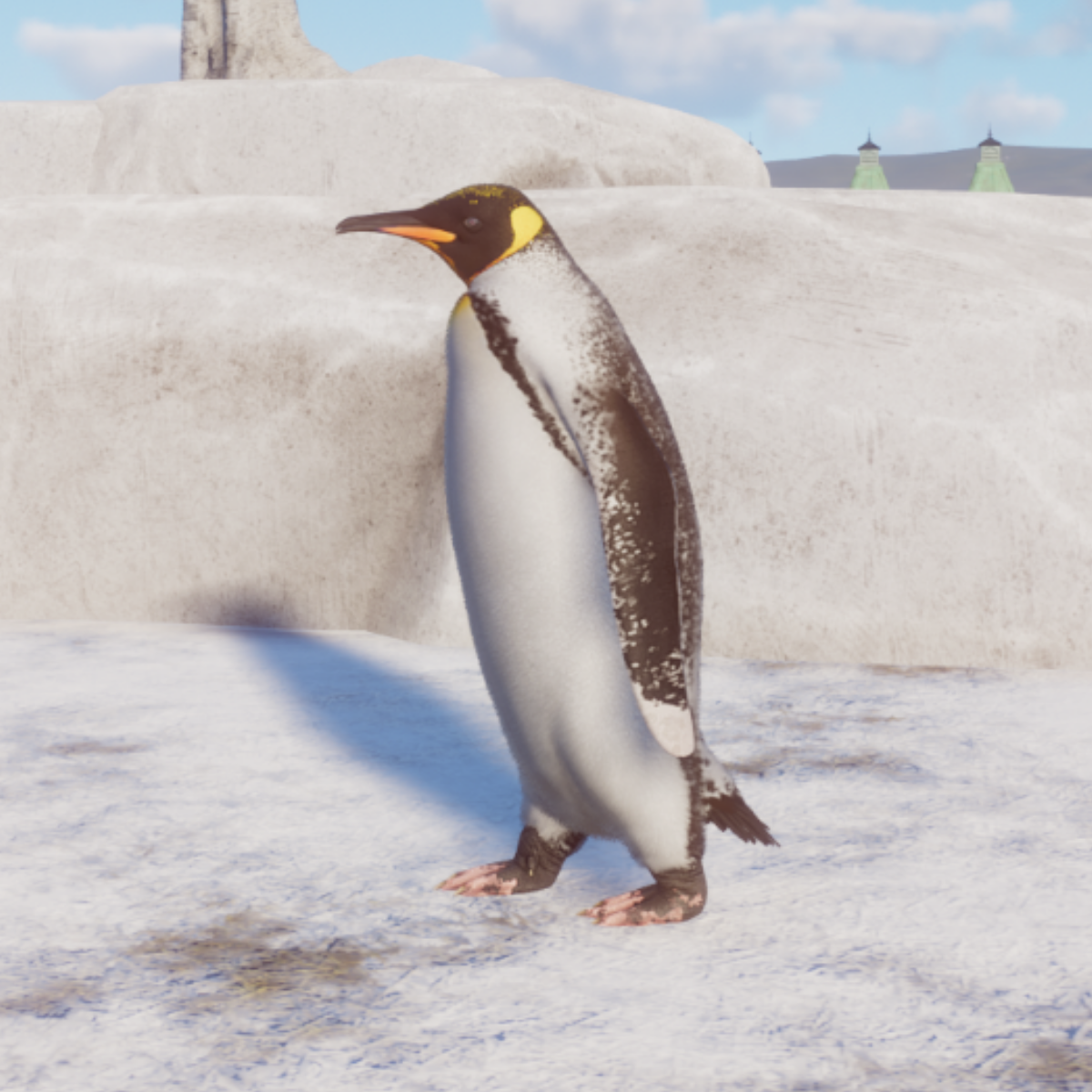
African Penguin
African penguins are the only penguin species that nest in Africa. Their scientific name means “diving wedges”.
Every African penguin has a unique pattern of black spots on its chest and belly, which helps people tell them apart.
They have a small patch of pink skin above their eyes that helps them stay cool in South Africa’s high temperatures.
African penguins are the only animal in this pack with a rare colourmorph.
Total colour morphs: 2
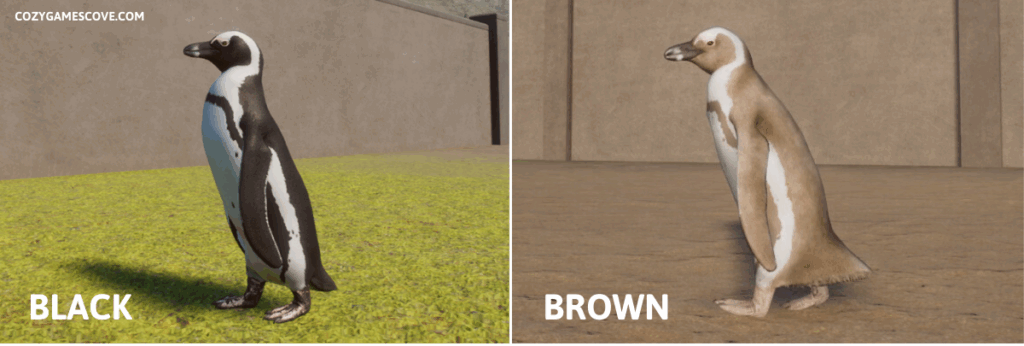
Colours are listed as:
- Black feathers with white front and black spots
- Brown mutation: Pale brown feathers with white front and brown spots
Fennec Fox
Fennec foxes are often called “desert foxes” because they live in the deserts of North Africa. They are the smallest foxes in the world, weighing only about 1 kilogram.
Fennec foxes are also known for their huge ears, which are the largest of any fox species. Their ears are not just for hearing; they also help them stay cool in the desert heat.
These nocturnal mammals have long, thick fur with a woolly undercoat. This helps keep them warm at night and protects them from the hot sun during the day.
The fennec fox in Planet Zoo has three shades of orange and brown.
Total colour morphs: 3
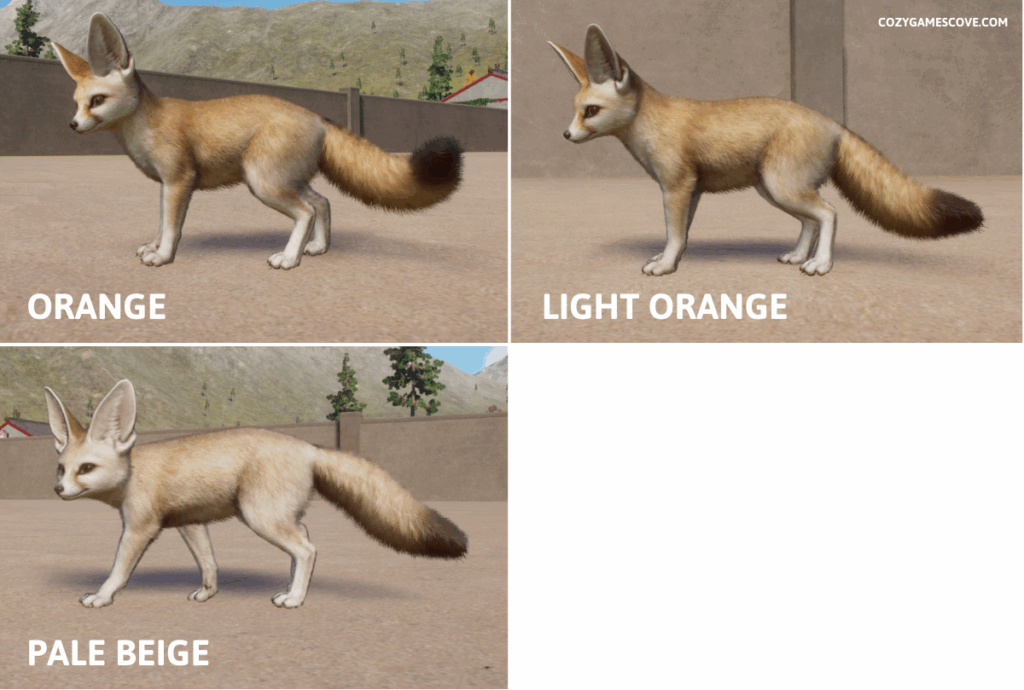
Colours are listed as:
- Orange fur and pale underside
- Light orange fur and pale underside
- Pale beige fur and pale underside
Meerkat
Meerkats are found in southern Africa, where they thrive in dry regions such as the Kalahari Desert in Botswana and the Namib Desert in Namibia.
Even though they’re called meerkats, these animals are actually part of the mongoose family. The word “meerkat” comes from Afrikaans and means “termite mongoose.”
Meerkats are very social and live together in groups called mobs. They use at least ten different calls to warn each other about different dangers, for example, they can communicate whether a predator is flying overhead or sneaking up from the ground.
Meerkats in Planet Zoo come in three different shades of brown fur.
Total colour morphs: 3
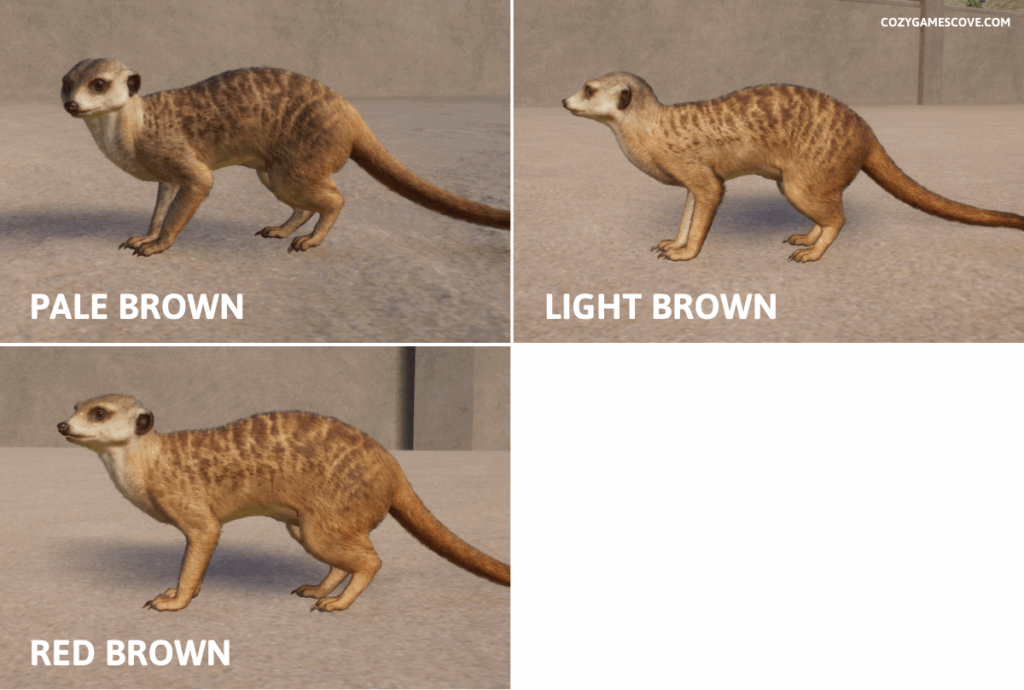
Colours are listed as:
- Pale brown fur with black banding on back
- Light brown fur with black banding on back
- Red brown fur with black banding on back
Southern White Rhinoceros
The southern white rhinoceros lives in the savannahs of southern Africa. Approximately 98.5% of the population resides in South Africa, Kenya, Zimbabwe, and Namibia, with the majority concentrated in South Africa.
They were believed to be extinct in the late nineteenth century. That changed in 1895, when fewer than a hundred were found in KwaZulu-Natal, South Africa.
Thanks to over a hundred years of conservation work, they have made a huge recovery and are now listed as near threatened. Poaching for their horns remains one of their biggest threats .
In Planet Zoo, these rhinos have three shades of grey skin, which in real life can be as thick as 5cm!
Total colour morphs: 3
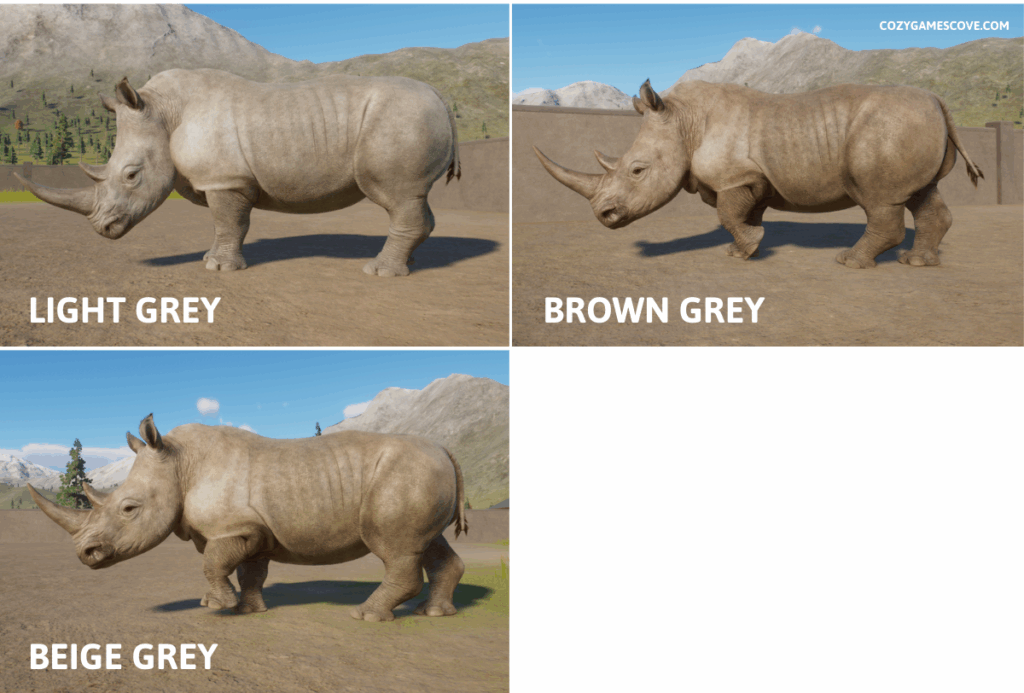
Colours are listed as:
- Light grey thick skin
- Brown grey thick skin
- Beige grey thick skin
Sacred Scarab Beetle
The sacred scarab beetle is a dung beetle found in North Africa. These beetles have been around since the age of the dinosaurs, but really thrived once mammals appeared and there was more dung available.
Recent research from South Africa shows that some dung beetles use moonlight to find their way at night, while others rely on the sun during the day. If there’s no moon, they can even navigate using the Milky Way.
In ancient Egypt, the scarab beetle was a powerful symbol, often associated with Khepri, the god of the rising sun, because the beetle rolled a dung ball that resembled the sun’s movement across the sky. Scarabs often appeared in Egyptian jewellery, amulets, and funerary art.
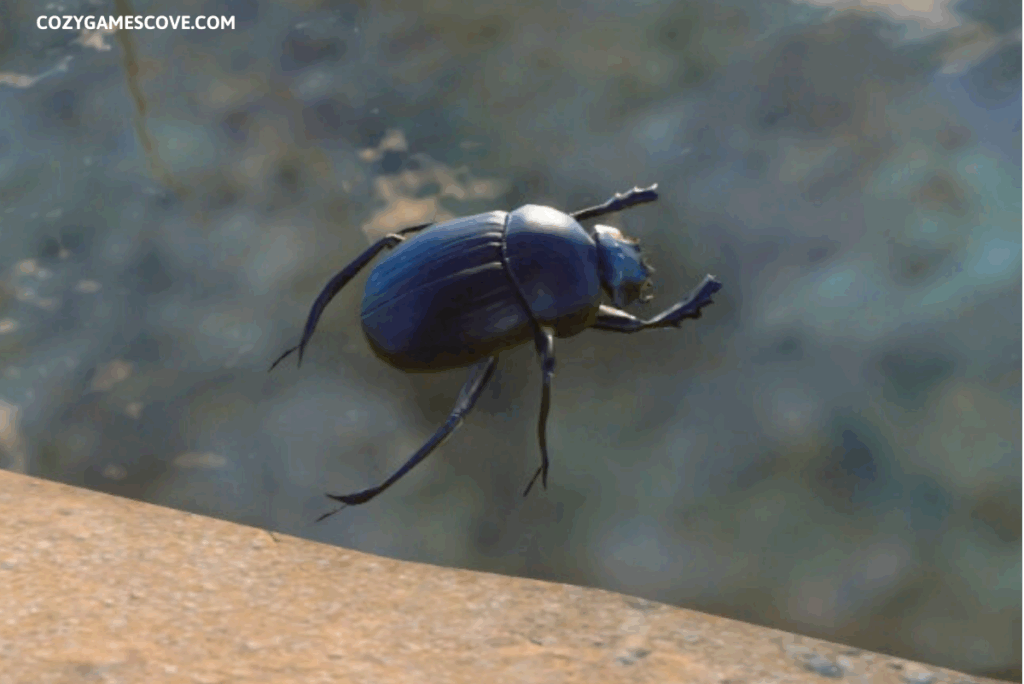
In Planet Zoo, exhibit animals are not given specific colors, but the sacred scarab beetle is black.
Every Single Colourmorph in Planet Zoo
If you want to see all the animal colors in Planet Zoo, I’ve put together a full list from every pack.
Below, you’ll find a list of animal colours organised by each pack.